Key takeaways
- Act fast on fresh spills. Absorb first and don't hose the oil. Concrete is porous, and every hour the oil sinks deeper.
- Set-in stains need chemistry that matches the stain: a degreaser for surface oil, a solvent poultice for deep stains, and enzymatic or microbial cleaners for oil that keeps coming back.
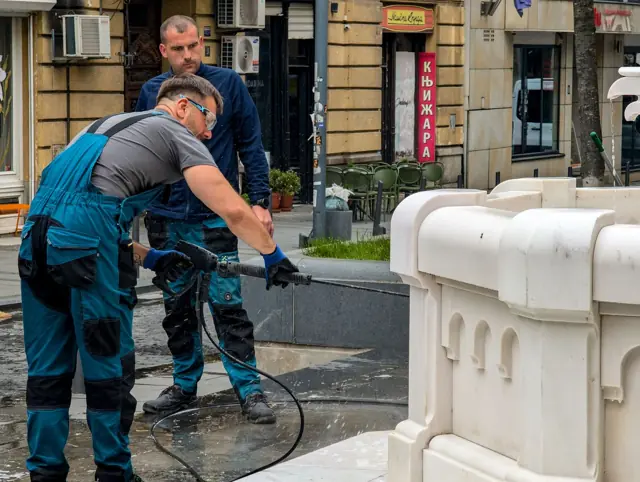
- Hot water plus a degreaser and a surface cleaner is the professional standard for driveways with several or older stains.
- Skip the internet hacks. Cola, bleach and WD-40 don't reliably remove oil and can leave their own marks.
- Never wash oil into the street or storm drain. In California that's a prohibited discharge. Absorb it, collect it and dispose of it properly.
- Asphalt driveways, pavers and sealed or stamped concrete need gentler products than bare concrete.
Why oil stains are so hard to get out of concrete
Concrete looks solid, but it's full of tiny pores and capillaries. When motor oil lands on a driveway, it doesn't just sit on top. It wicks down into those pores, sometimes well below the surface. That's why scrubbing with soap often lightens a stain for a day before it "ghosts" back. Oil deeper in the slab slowly migrates back up toward the surface.
Southern California weather makes it worse. Long, hot, dry summers let the sun bake oil into the surface, where it thickens and darkens over time. Dust from dry months and Santa Ana winds sticks to the oily film and turns it into a black, gritty patch. By the time the rainy season arrives, a small drip from last spring can be a dark spot the size of a pizza.
Not every driveway stain is motor oil, and identifying the fluid helps you pick the right approach:
- Motor oil: Dark brown to black. This is the most common driveway stain.
- Transmission and power steering fluid: Often reddish. These are oily and behave much like motor oil.
- Coolant/antifreeze: Often green, orange or pink and watery. It's toxic to pets and wildlife and tastes sweet to them, so clean it up right away.
- Brake fluid: Clear to amber and thin. It can damage some coatings and paint.
- Grease and cooking oil: From BBQs, trash bins or restaurants. Animal and vegetable fats respond well to alkaline degreasers.
- Rust: Orange-brown marks from metal furniture, fertilizer or sprinkler water. Rust isn't oil and needs an acid-based rust remover instead.
Fresh spill? What to do in the first 30 minutes
The best oil-stain treatment is the one you start right away. A fresh spill hasn't wicked deep yet, so most of it can still be pulled back out.
- Don't spray it with waterWater spreads oil across a larger area and can carry it toward the gutter and storm drain. Contain it instead.
- Cover it with an absorbentPour a generous layer of plain clay cat litter, sawdust, cornstarch or a commercial oil absorbent over the entire spill, extending past the edges.
- Grind it inStep on the absorbent and twist your shoe, or work it with a stiff broom. Breaking the granules up exposes more surface area to soak up the oil.
- Let it sitLeave it for several hours or overnight. Keep it dry, and cover it if wind or sprinklers might disturb it.
- Sweep up and bag itCollect the used absorbent in a sealed bag. Oil-soaked material doesn't belong in a storm drain or a garden bed. Check your city's rules or LA County's household hazardous waste program for disposal.
- Scrub the shadowWork a few drops of grease-cutting dish soap into the remaining mark with a stiff nylon brush and a small amount of warm water. Blot it up with rags or more absorbent instead of hosing it away.
Pro tip: Keep a small bag of clay cat litter and a stiff brush in the garage. If you catch a leak within minutes, there's a good chance you'll never need professional stain removal for it.
Oil stain removal methods compared
Once a stain has set in, no single product works on everything. Here's how the main options compare:
| Method | Best for | How it works | Watch out for |
|---|---|---|---|
| Absorbents (clay litter, sawdust, commercial absorbent) | Fresh spills | Soaks up oil before it wicks deep | Does little on old stains; dispose of used material properly |
| Dish soap and stiff brush | Light, recent shadows | Surfactants loosen and lift surface oil | Not strong enough for deep or baked-in stains |
| Concrete degreaser (alkaline cleaner) | Moderate stains on bare concrete | Emulsifies oil so it can be scrubbed and rinsed out | Wear gloves and eye protection; can dull sealers; capture rinse water |
| Solvent poultice | Deep, old, localized stains | Solvent re-dissolves oil in the pores; the absorbent paste draws it up as it dries | Solvents are flammable and give off fumes; slow; may soften sealers and asphalt |
| Enzymatic/microbial cleaner | Stains that keep "ghosting" back | Microorganisms and enzymes digest hydrocarbons over days | Takes time; needs moisture and moderate temperatures to work |
| Hot-water pressure washing + degreaser | Whole driveways, multiple or older stains | Heat thins oil, the degreaser emulsifies it, and the surface cleaner lifts it evenly | Needs pro equipment and water capture; too much pressure etches concrete |
A word on popular "hacks": cola, oven cleaner, bleach and WD-40 show up in a lot of online advice. Bleach doesn't break down petroleum. Cola and WD-40 may move a little surface oil around, but they don't pull it out of the pores. Oven cleaner is caustic and can etch or discolor concrete. You'll get better results from products made for the job.
Step-by-step: removing an older, set-in oil stain
If the stain has been there for weeks or months, work through these stages in order. Many stains come out at stage one or two, and only the stubborn ones need the poultice.
Stage 1: Degrease and scrub
Dry-sweep the area. Apply a concrete degreaser according to the label, usually diluted for light stains and stronger for heavy ones. Let it dwell for the recommended time without letting it dry out, then scrub hard with a stiff nylon brush. Avoid wire brushes on decorative concrete. Blot up the dirty solution with absorbent or a wet-dry vac rather than rinsing it toward the street. Repeat once or twice if the stain keeps getting lighter.
Stage 2: Make a poultice for deep stains
A poultice pulls oil up and out of the concrete. You mix an absorbent powder or granules (finely ground clay litter, diatomaceous earth, or a commercial poultice powder) with enough solvent to form a thick paste, about the consistency of peanut butter. Acetone and mineral spirits are commonly used solvents.
- Spread the paste about a quarter to half an inch thick, extending past the edges of the stain.
- Cover it with plastic sheeting and tape down the edges. This slows evaporation so the solvent has time to dissolve the oil in the pores.
- After about a day, remove the plastic and let the paste dry completely. As it dries, it draws the dissolved oil up into the powder.
- Scrape it off, bag it and repeat if needed. Deep stains often take two or three rounds.
Safety first: Solvents like acetone and mineral spirits are flammable and give off strong vapors. Work outdoors with plenty of airflow, keep them away from water heaters, pilot lights, cigarettes and hot engines, wear chemical-resistant gloves and eye protection, and never mix cleaning chemicals. Read and follow every product label.
Stage 3: Let microbes finish the job
Enzymatic or microbial concrete cleaners use naturally occurring microorganisms that break hydrocarbons down into simpler compounds such as carbon dioxide and water. They're slower than solvents, and you may need to keep the area damp and repeat applications over several days. Still, they're good for stains that "ghost" back because oil deep in the slab keeps rising. They also work well as a follow-up after a poultice.
Why professionals use hot water
Cold-water pressure washing on its own often just makes oil stains cleaner on top. Heat is what changes the result. Hot water thins oil and grease so the degreaser can emulsify them, and the oily residue rinses out of the pores instead of smearing around. Commercial hot-water pressure washers can heat water to around 200°F, far hotter than anything from a garden hose or a rental unit.
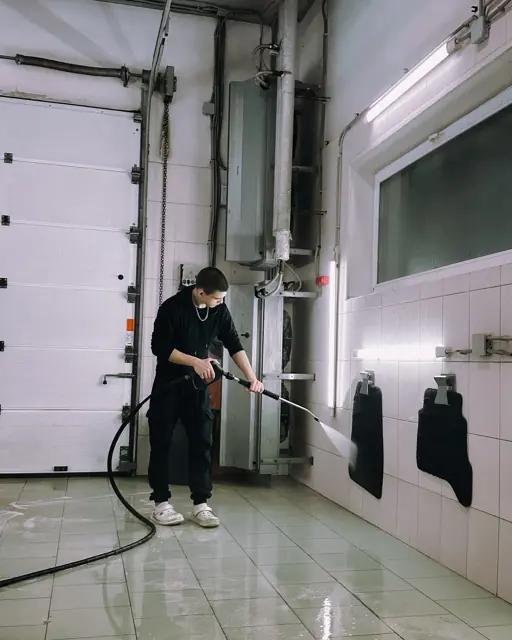
A professional oil-stain treatment usually works like this: pre-treat each stain with degreaser, let it dwell, agitate the worst spots, then clean the entire driveway with a rotary surface cleaner. The surface cleaner keeps the nozzles at a fixed height for an even finish, so you don't end up with one bright clean spot in the middle of a gray driveway. Typical pressure for residential concrete is in the 2,500–4,000 PSI range, adjusted for the age and condition of the slab, because too much pressure can etch the surface and expose aggregate.
Wastewater matters just as much as the cleaning. Oily wash water is exactly what California's stormwater rules are written to keep out of storm drains, which flow untreated to local waterways and the ocean. The EPA's NPDES stormwater program and the California State Water Resources Control Board set the framework, and cities enforce it locally. Where required, Spraydaddys blocks drains and uses water recovery equipment. Learn more in our article on eco-friendly pressure washing and California runoff rules.
For businesses with oily parking lots, loading docks, drive-thrus or garages, our commercial pressure washing service handles larger areas on a custom quote, starting from $0.12 per square foot.
Pavers, stamped concrete and asphalt need different care
The methods above assume bare, unsealed concrete. Other driveway materials need adjustments:
- Asphalt driveways: Asphalt is held together by a petroleum-based binder. Solvents and strong degreasers can soften it and leave a dull, damaged patch. Stick to absorbents, mild detergents and products labeled safe for asphalt.
- Sealed and stamped concrete: Solvents can soften or cloud acrylic sealers, and harsh degreasers may dull them. Test in a hidden area first. Plan on resealing the treated area, or the whole driveway, after heavy stain removal.
- Interlocking pavers: Oil can soak into individual pavers. Treat them like concrete, but use moderate pressure and expect to replace joint sand afterward. Badly stained pavers can sometimes just be swapped out.
- Natural stone: Some stones are sensitive to acidic or strongly alkaline cleaners. Use products rated for that specific stone.
How to prevent oil stains in the first place
Once your driveway is clean, a few simple habits will keep it that way:
- Fix the leak. A slow drip will keep restaining the same spot. Have a mechanic check gaskets, seals and the oil pan.
- Use a drip pan or garage mat under any car you know leaks, and under project cars, motorcycles and lawn equipment.
- Seal the concrete. After a thorough cleaning, a penetrating sealer (silane/siloxane-type products are common) reduces how much oil soaks in and makes future spills much easier to clean up.
- Keep absorbent on hand and treat spills the same day.
- Schedule an annual cleaning. Removing a year's worth of tire marks, dust and minor drips keeps stains from building up. See how driveways fit into a full home schedule in how often you should pressure wash your house.
Spraydaddys driveway & sidewalk cleaning starts at $179, and you can bundle it with house washing or deck & patio cleaning in a single visit. Try the calculator on our pricing page for a quick estimate.
Frequently asked questions
Can old oil stains be completely removed from concrete?
Many old stains can be removed completely or lightened so much they're hard to spot. Very old, deep stains, especially on porous or weathered concrete, may leave a faint shadow even after degreasing, hot-water cleaning and a poultice. Treating stains early gives the best chance of full removal.
Will pressure washing alone remove oil stains?
Usually not, especially with cold water. Pressure washing removes surface grime, but oil in the pores needs a degreaser and ideally hot water to emulsify it. Professionals combine pre-treatment, heat and a surface cleaner for the best results.
Can I just hose oil into the street?
No. In California, anything other than rainwater generally isn't allowed to enter the storm drain system, and oil is a pollutant that harms local waterways and the ocean. Absorb spills, bag the used absorbent and dispose of it through your local household hazardous waste program.
Does cat litter really work on oil stains?
Plain clay cat litter works well on fresh spills because it soaks up oil before it sinks in. Grind it in, leave it for several hours or overnight, then sweep it up. On old, set-in stains it does very little on its own, so you'll need a degreaser or poultice.
Tired of looking at that dark patch on your driveway? Spraydaddys removes oil stains for homes and businesses across Los Angeles County and the Long Beach area using hot water, biodegradable degreasers and water recovery where required, and an owner is on site at every job. Get your free quote or call (213) 866-1990. New customers who sign up for texts save 15%.