Key takeaways
- In Los Angeles County, storm drains are separate from the sewer system, and stormwater is generally not treated before it reaches local creeks, rivers and the ocean.
- Under the Clean Water Act and the region's MS4 stormwater permit, cities prohibit most non-stormwater discharges. In practice, pressure washing wash water should not enter a gutter, street or storm drain.
- "Biodegradable" does not mean "storm-drain safe." Even biodegradable cleaners can harm aquatic life.
- Typical best management practices (BMPs): dry cleanup first, block or cover drains, contain and recover wash water, and send it to landscaping or the sanitary sewer only where allowed.
- Rules vary by city and sewer agency, so always confirm requirements with your local stormwater program.
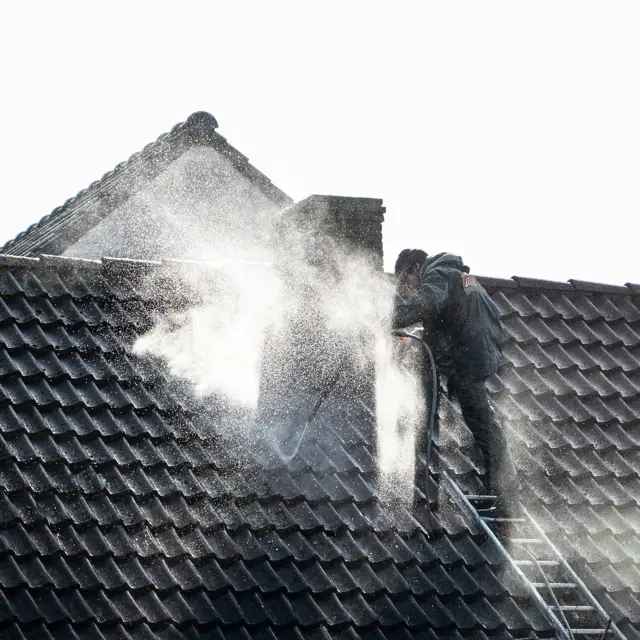
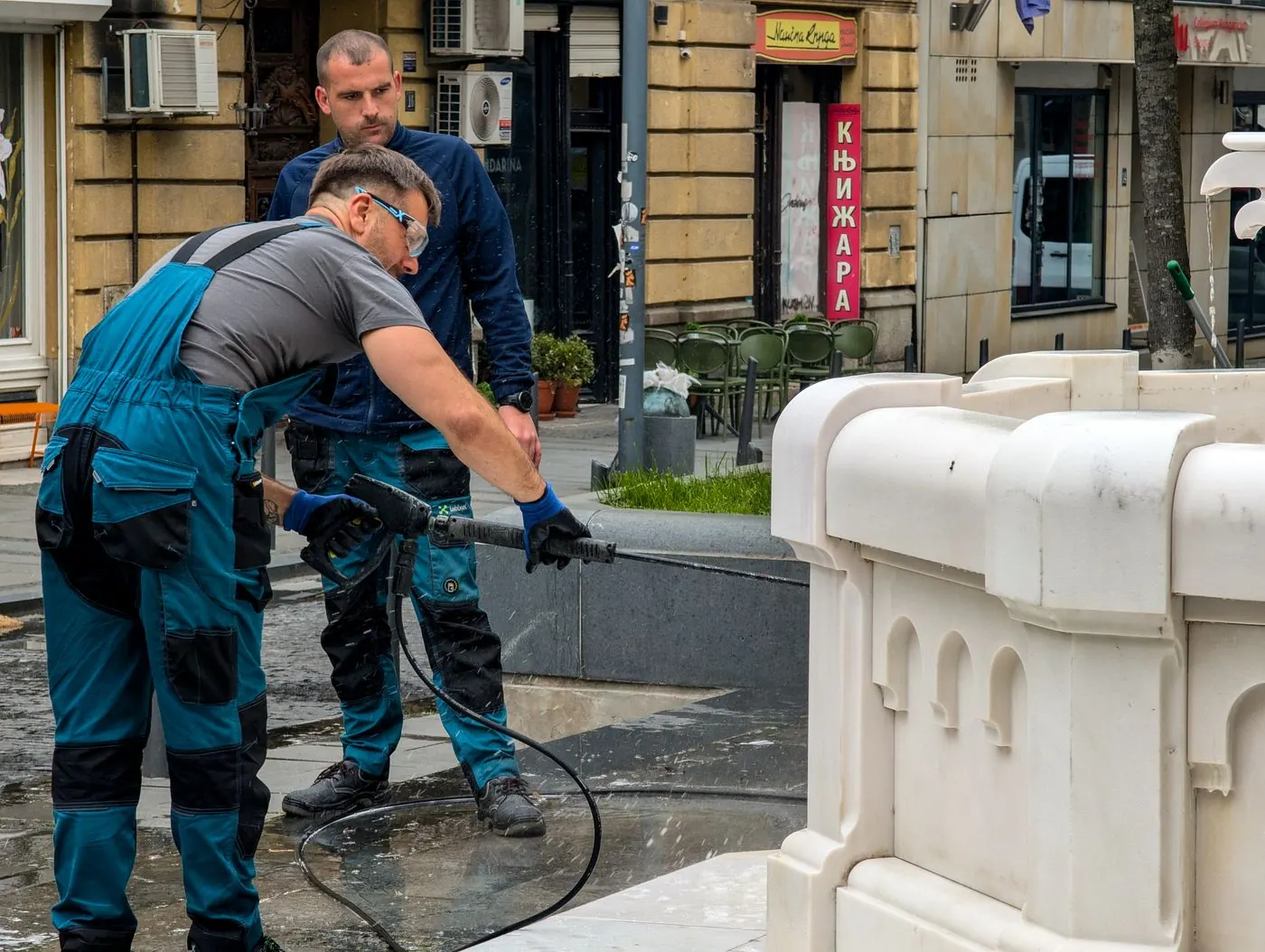
Pressure washing makes driveways, storefronts and patios look new, but it also produces something many people never think about: dirty water. That water carries whatever was on the surface, including oil, tire dust, food grease, pet waste, paint chips and cleaning chemicals. Where it goes next matters, both for the environment and for anyone who hires a pressure washing company in Los Angeles.
This guide explains, in plain language, how stormwater rules apply to pressure washing in California, what eco-friendly cleaning really means, and how responsible contractors keep wash water out of storm drains. It is general information, not legal advice. Requirements differ between cities, so we will point you to the agencies that can give you a definitive answer for your property.
Why storm drains matter in Los Angeles County
Most homes and businesses in Southern California are served by two separate drainage systems. The sanitary sewer takes water from toilets, sinks and floor drains inside buildings to a wastewater treatment plant. The storm drain system collects rain from streets, gutters and parking lots through curbside catch basins and carries it to channels, rivers and, eventually, the Pacific Ocean.
The key difference: storm drain water is generally not treated. As Los Angeles County's own pollution-prevention materials put it, stormwater is not treated before it is sent out to the ocean. Anything that flows into a curbside drain in Long Beach, Torrance or Los Angeles can end up at the beach, where polluted runoff contributes to beach closures and harms marine life.
That is the reason behind the familiar slogan used by many California cities: only rain down the storm drain. Wash water from a driveway cleaning or a restaurant patio is not rain, so it does not belong there.
The rules: Clean Water Act, NPDES and MS4 permits
The regulations behind stormwater protection work in layers. Here is a simplified overview:
- Federal level: The Clean Water Act prohibits discharging pollutants to waters of the United States without a permit, through the National Pollutant Discharge Elimination System (NPDES). The U.S. Environmental Protection Agency explains the program on its NPDES website.
- State level: In California, the State Water Resources Control Board and nine Regional Water Quality Control Boards administer NPDES permits. See the California Water Boards site.
- Regional level: Cities' storm drain systems are called municipal separate storm sewer systems, or MS4s. In July 2021, the Los Angeles Regional Water Quality Control Board adopted a regional MS4 permit (Order No. R4-2021-0105) covering 95 cities plus Los Angeles County, Ventura County and their flood control districts.
- Local level: To comply with their permits, cities adopt stormwater ordinances that prohibit illicit (non-stormwater) discharges into the storm drain system and enforce them through inspections, education and citations.
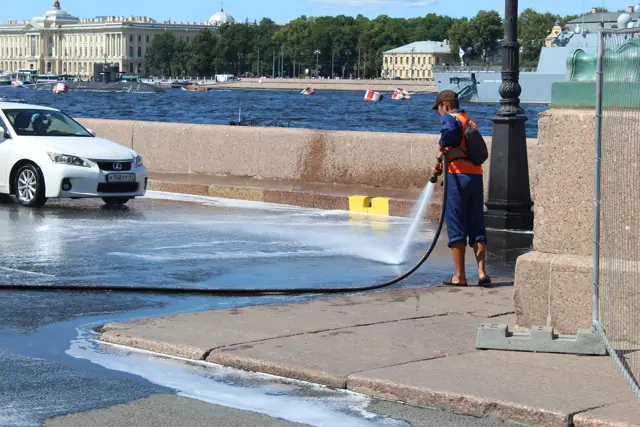
For a property owner, the practical takeaway is simple. In most Los Angeles County cities, allowing wash water, soap, degreaser or debris to flow into the street or a catch basin is treated as a prohibited discharge under the local stormwater ordinance. Both the property owner and the contractor can be held responsible, depending on the city. Fines and procedures vary, so check with your city's stormwater or public works department.
Verify locally. The City of Los Angeles stormwater program is run by LA Sanitation & Environment, and Los Angeles County Public Works (dpw.lacounty.gov) handles unincorporated areas. Other cities, such as Long Beach, Torrance or Pasadena, run their own programs. Contact your city before a large cleaning project, especially one involving degreasers or a commercial site.
What "eco-friendly pressure washing" really means
"Eco-friendly" gets used loosely in marketing. In pressure washing, it should mean more than a green label on the cleaner. A genuinely responsible approach rests on four ideas:
- Use the least water and chemistry that will do the job. Hot water, the right nozzle and proper technique often reduce or eliminate the need for detergents.
- Choose less harmful products. Biodegradable, phosphate-free cleaners used at the correct dilution are better than harsh solvents. But see the next section: they still do not belong in a storm drain.
- Control where the water goes. Containment and recovery are what actually keep pollutants out of waterways.
- Protect people, plants and property. Pre-wetting landscaping, rinsing thoroughly and keeping chemicals away from pets and children are part of the job.
The "biodegradable" myth
A common misconception is that biodegradable soap can be rinsed into the gutter. It cannot. Stormwater guidance from California agencies is consistent on this point. San Luis Obispo County's power washing guidance, for example, warns that even biodegradable cleaners can be toxic to aquatic life and that soapy water entering the storm drain can affect fish and wildlife within hours. "Biodegradable" means a product breaks down over time; it does not mean it is harmless when it reaches a creek in concentrated form, and the wash water still carries the dirt, oil and metals it picked up from the surface.
Best management practices (BMPs) for pressure washing
Stormwater programs throughout California, including guidance published by the California Stormwater Quality Association (CASQA) and many Los Angeles County cities, describe a similar set of BMPs for mobile surface cleaning. Here is how they typically apply on a job:
- Dry cleanup firstSweep, pick up litter and leaves, and use absorbent on fresh oil spots before any water is used. Less debris in means less pollution out. Used absorbent is bagged and disposed of properly, not washed away.
- Identify every drainLocate curbside catch basins, area drains, gutters and slopes that could carry water off the property. Water travels farther than people expect.
- Block or cover storm drain inletsUse drain covers, rubber mats, plugs or sandbags/berms so wash water cannot enter the storm drain system.
- Contain the wash areaBerms, booms and tarps direct water to a low point where it can be collected.
- Recover the waterVacuum recovery units, sump pumps or wet/dry vacuums collect wash water instead of letting it run off.
- Dispose of it properlyRecovered water goes to the sanitary sewer only with permission or approval from the local sewer agency, or, when only plain water was used, it may be directed onto landscaping where it soaks in without running off, if the local program allows it.
- Remove the containment and clean upCollect any debris trapped by berms and filters, and remove drain covers only after the area is dry and clear.
The right combination depends on the surface and what is on it. A homeowner's patio rinsed with plain water is very different from a restaurant loading dock with grease, which may need full recovery and approved disposal.
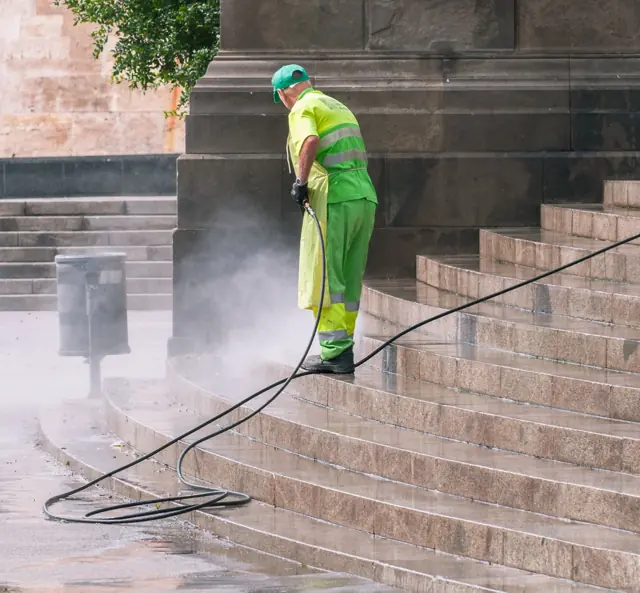
Where wash water can and cannot go
The table below summarizes typical disposal options for pressure washing wash water in Los Angeles County. Treat it as a general guide; your city or sewer agency has the final say.
| Destination | Generally acceptable? | Typical conditions |
|---|---|---|
| Street, gutter or curbside storm drain | No | Treated as a prohibited non-stormwater discharge in most Los Angeles County cities, with or without soap. |
| Landscaping or lawn on the property | Sometimes | Usually limited to plain water without detergents, with debris screened out, absorbed into the soil, never running off the property, and with the owner's permission. |
| Sanitary sewer (sink, floor drain, sewer clean-out) | Often, with approval | Requires permission from the property owner and compliance with the local sewer agency's rules; some agencies require a permit or pretreatment (for example, removing solids, oil and grease). |
| Collected and hauled away | Yes | Used for heavily contaminated water, such as from grease or oil cleanup, that cannot go to landscaping or the sewer. |
| Septic system | Only if suitable | Some guidance allows it when the water is free of contaminants that could disrupt the system; check locally. |
Commercial properties deserve extra care. Restaurants, auto-related businesses and industrial sites often have grease and oil on their pavement, and they may also be subject to their own stormwater inspections. If you manage a commercial property, ask your contractor how they will contain and dispose of wash water before work starts. Our commercial pressure washing service plans containment and recovery as part of every quote.
Water conservation rules and pressure washing
Stormwater is not the only rule set to know. Many Southern California water suppliers also restrict outdoor water use. The City of Los Angeles Water Conservation Ordinance, enforced by LADWP, prohibits hosing down hard surfaces such as sidewalks, walkways, driveways and parking areas. LADWP encourages residents to use a broom instead of a hose for routine cleanup.
A pressure washer typically cleans a surface with much less water than an open garden hose, and professional cleaning is done for a specific purpose, not daily rinsing. Still, conservation rules and their exceptions vary by water supplier, so check with yours. Practically, this is one more reason to sweep first, wash only when a surface genuinely needs it, and choose a contractor that uses efficient equipment. Our guide to how often to pressure wash your house can help you avoid over-cleaning.
How to choose a compliant pressure washing company
Because the property owner can share responsibility for a prohibited discharge, it pays to ask a few questions before you hire anyone for driveway cleaning, house washing or commercial work:
- How will you keep wash water out of the storm drain? Do you bring drain covers, berms and recovery equipment?
- What cleaning products do you use, and at what dilution? Can you share product information?
- Where will recovered water be disposed of?
- Are you licensed and insured, including general liability and workers' compensation?
- Who supervises the job on site?
How Spraydaddys works: we use eco-friendly, biodegradable commercial-grade cleaners, sweep and pre-treat before washing, protect drains, and use water recovery and recycling where required. One owner is on site at every job, and we are licensed and insured with general liability and workers' compensation coverage.
For homeowners doing their own cleaning, the same principles apply on a smaller scale: sweep first, skip the soap if water alone will do, keep water on your property, and never rinse cleaner, paint or oil into the gutter. If you have a stubborn stain, our oil stain removal guide covers safer methods, including proper disposal of absorbent.
Eco-friendly pressure washing FAQ
Is it illegal to let pressure washing water go into the storm drain in California?
In most Los Angeles County cities, local stormwater ordinances adopted under the Clean Water Act and the regional MS4 permit prohibit non-stormwater discharges, which generally includes pressure washing wash water. Rules and enforcement vary by city, so check with your local stormwater program for the exact requirements at your property.
Can biodegradable soap go down the storm drain?
No. Biodegradable means a product breaks down over time, not that it is safe for waterways. California stormwater guidance warns that even biodegradable cleaners can be toxic to aquatic life, and the wash water also carries dirt, oil and metals from the surface.
Where should pressure washing wash water go?
It should be contained and recovered. Depending on local rules and what was used, it may go to the sanitary sewer with permission or approval from the sewer agency, onto landscaping if it is plain water that soaks in without running off, or be collected and hauled away for proper disposal.
Do I need to do anything as the homeowner when I hire a pressure washer?
Ask the contractor how they will keep water out of the storm drain, what products they use and where wash water will be disposed of. Hiring a company that plans containment protects your local waterways and reduces your risk if a city inspector sees runoff.
Want spotless surfaces without the runoff? Spraydaddys provides eco-friendly pressure washing and soft washing across Los Angeles County and Long Beach, with drain protection and water recovery where required. Request a free quote or call (213) 866-1990 to talk through your project.