Key takeaways
- Pressure washing cleans with force. It's the right tool for hard, durable surfaces like concrete driveways, sidewalks and commercial hardscape.
- Soft washing cleans with chemistry. A low-pressure spray applies a biodegradable solution that breaks down dirt and kills mold, mildew and algae, then a gentle rinse carries it away.
- Stucco, painted siding, vinyl, window frames and roofs should be soft washed. High pressure can gouge, strip, force water inside or void a roofing warranty.
- Many jobs combine both: soft wash the house and roof, pressure wash the driveway and walkways.
- A good crew picks the method for each surface, tests first and protects plants, pets and storm drains.
What's the actual difference?
"Pressure washing" and "soft washing" are often used as if they mean the same thing, and both use similar equipment. The difference is in what does the cleaning.
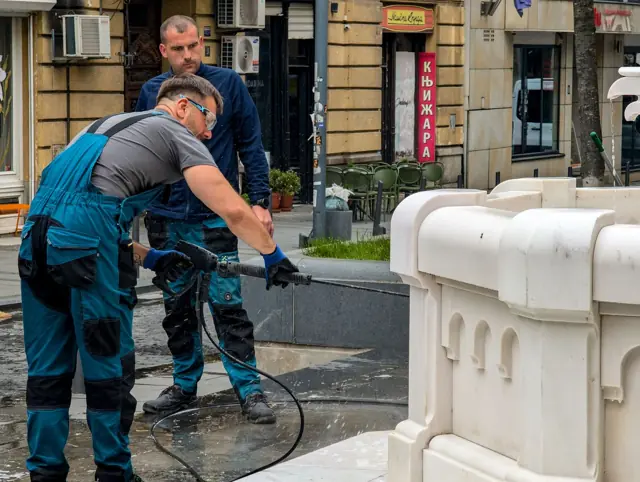
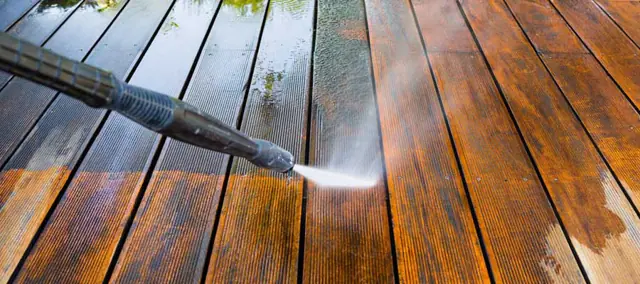
Pressure washing cleans mostly through mechanical force. A pump pushes water through a narrow nozzle at high pressure, and the impact knocks dirt, grime, gum and loose material off the surface. For residential concrete, pros typically work somewhere in the 2,500–4,000 PSI range, often with a rotary surface cleaner that keeps the wand a fixed distance from the ground for an even finish. Commercial jobs with grease or oil often add hot water and a degreaser.
Soft washing cleans mostly through chemistry. The solution goes on at low pressure, similar to a strong garden hose, through a dedicated pump or a low-pressure nozzle. It typically contains a diluted oxidizer (usually sodium hypochlorite) plus a surfactant. The solution sits on the surface for a few minutes so it can dissolve grime and kill organic growth, and then everything is rinsed off gently. Pressure is mainly used to apply and rinse, not to scrub.
PSI isn't the whole story. Flow rate (gallons per minute), nozzle angle and the distance between the tip and the surface all change how hard the water actually hits. A 25-degree tip held a few inches from stucco can do real damage even on a modest machine. That's why technique and training count as much as the equipment.
How soft washing works: chemistry, not force
Most of the dark, blotchy staining on Southern California homes isn't plain dirt. It's living material: mildew, mold, algae and sometimes lichen. In marine-layer neighborhoods like Long Beach, San Pedro and the beach cities, morning moisture feeds this growth on shaded walls and roof slopes. Black streaks on roofs are commonly linked to the algae Gloeocapsa magma, which feeds on the limestone filler in many asphalt shingles.
Blasting organic growth with high pressure mostly removes what you can see. The roots and spores stay in the pores of stucco, wood grain or shingle granules, and the stain often comes back quickly. Soft washing goes after the cause:
- The oxidizer (sodium hypochlorite, the active ingredient in pool chlorine and household bleach) kills mold, mildew and algae and lightens organic stains. On siding it's diluted heavily. Roofs and heavier growth usually get a stronger mix.
- The surfactant breaks surface tension so the solution clings to vertical walls, soaks into texture and porous surfaces, and stays wet long enough to work.
- Dwell time lets the chemistry do the work. Instead of wearing the surface down with the wand, the technician waits a few minutes, checks the result and reapplies on stubborn spots if needed.
- A low-pressure rinse carries away the loosened grime and solution without forcing water into seams, weep screeds or window frames.
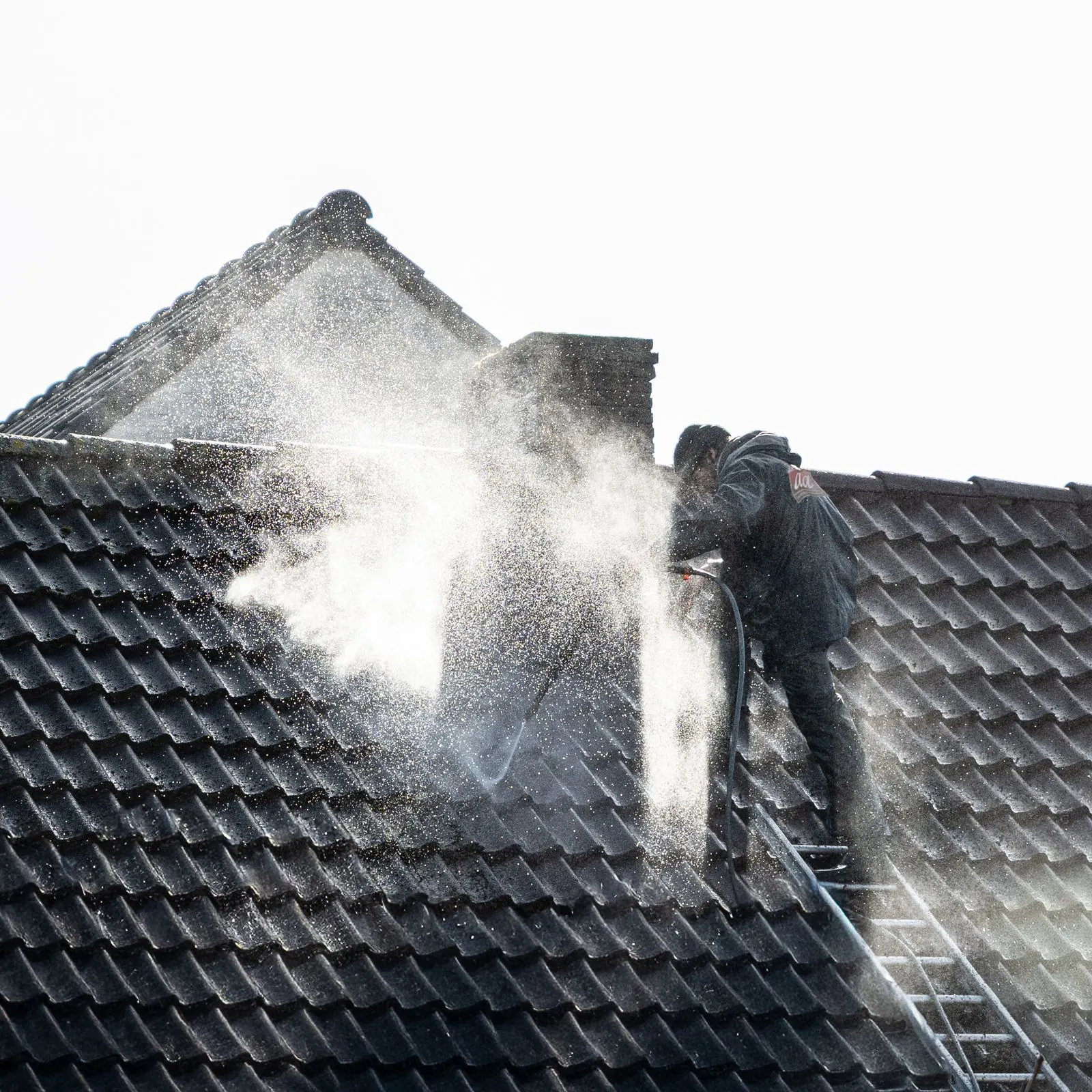
Roofs are the clearest example. The Asphalt Roofing Manufacturers Association discourages using pressure washers or other mechanical devices on roofs. Pressure can strip the protective granules that shield shingles from UV, and that can shorten roof life and create warranty problems. For more, see our guide to black streaks on your roof and how to remove them safely, or visit our roof cleaning page.
How pressure washing works: when force is the right tool
Pressure washing isn't the villain here. It's simply the right tool for a different set of surfaces. Hard, durable materials that people walk or drive on get covered in grime that chemistry alone won't lift: ground-in dirt, tire marks, gum, efflorescence, oil and the dark film that builds up on busy sidewalks.
- Concrete driveways and sidewalks: A surface cleaner at the right pressure removes years of grime evenly without the "zebra stripes" a handheld wand often leaves. See our driveway & sidewalk cleaning service.
- Oil and grease: Hot water and a degreaser make a big difference on automotive fluids and restaurant grease. Our driveway oil stain removal guide covers the full process.
- Commercial hardscape: Plazas, storefront walkways, parking structures, dumpster pads and drive-thrus need the power to clear gum, grease and foot-traffic grime. Our commercial pressure washing team handles these.
- Pool decks and pavers: These usually get moderate pressure plus pre-treatment, with extra care around joint sand, coping and pool equipment.
Even on concrete, more pressure isn't always better. Too much pressure or a tip held too close can etch the surface, expose aggregate and leave permanent wand marks. A skilled operator uses enough pressure to clean, not to carve.
Surface-by-surface guide: which method to use
The table below shows how professionals typically approach common surfaces around Los Angeles homes and businesses. Pressure figures are general ranges. The right setting depends on the specific material, its age and condition, the nozzle and the operator.
| Surface | Recommended method | Typical pressure | Why |
|---|---|---|---|
| Stucco walls | Soft wash | Low pressure; gentle rinse only | Porous and textured. High pressure can gouge it, chip the finish coat and push water into the wall. |
| Painted wood siding and trim | Soft wash | Low pressure | Pressure strips paint, raises wood grain and forces water into joints. |
| Vinyl siding | Soft wash (preferred) | Low; roughly 1,300–2,000 PSI is sometimes used with a wide tip | Water can get behind overlapping panels. Mildew needs a solution to stop it coming back. |
| Asphalt shingle roof | Soft wash only | Low pressure, no mechanical scrubbing | Protects granules and avoids conflicts with manufacturer guidance. |
| Clay or concrete tile roof | Soft wash | Low pressure | Tiles can crack. High pressure can strip surface coatings on concrete tile. |
| Wood deck or fence | Soft wash or low-pressure wash with a wood cleaner | About 500–1,500 PSI with a fan tip | Softwoods splinter and "fur" under high pressure. |
| Composite decking | Low-pressure wash with a suitable cleaner | Follow the manufacturer's limits | Some brands set pressure and distance limits that affect the warranty. |
| Concrete driveway or sidewalk | Pressure wash (surface cleaner) | About 2,500–4,000 PSI | Dense and durable. Ground-in grime needs mechanical force. |
| Pavers and stone | Pressure wash, moderate | Varies by stone | Joint sand can wash out and may need replacing. Softer stones need less pressure. |
| Windows, screens, light fixtures | Soft wash / hand detail | Very low | Seals, screens and glass are easily damaged. |
What goes wrong when the wrong method is used
Most exterior cleaning damage comes from using too much pressure on a surface that can't take it. These are the problems we're most often asked to fix after DIY jobs or rushed contractors:
- Gouged or "tiger-striped" stucco where a narrow tip cut into the finish coat.
- Water intrusion behind siding, around window frames or through stucco cracks, which can cause interior stains, damp insulation or mold inside wall cavities.
- Failed window seals that leave dual-pane windows foggy.
- Stripped or blotchy paint, especially on older, oxidized (chalky) paint.
- Furred, splintered deck boards that need heavy sanding.
- Granule loss on shingles, which shortens roof life.
- Etched concrete and wand marks that stay visible permanently.
Using too little cleaning power causes problems too. If you rinse a mildew-covered wall with plain water, it may look fine for a few weeks before the green comes back. Fixing that means cleaning with the right method, not pushing harder.
Before you rent a pressure washer: Never use a zero-degree (red) tip on any part of your house, never point the wand up under siding laps or into vents, and never stand on a ladder while running a pressure wand. Kickback from the wand can throw you off balance. Roofs and second stories are best left to insured professionals.
Is soft washing safe for plants, pets and the environment?
Done correctly, yes. Responsible soft washing depends on application and rinsing habits as much as the solution itself:
- Plants: Landscaping gets soaked with clean water before and after application, so any overspray is diluted right away. On hot days, plants get rinsed more often.
- Pets and people: Keep pets and kids indoors during the wash and until surfaces are rinsed and drying. Close windows and doors.
- Chemistry: Sodium hypochlorite breaks down relatively quickly in sunlight and in contact with organic material, mostly into salt and water. That's one reason it's so widely used. Spraydaddys uses biodegradable, commercial-grade cleaners matched to each surface.
- Runoff: In California, wash water generally can't be allowed to flow into the storm drain system, which drains to local waterways and the ocean without treatment. Where required, we block drains and use water recovery equipment. The California State Water Resources Control Board oversees stormwater rules statewide, and our article on eco-friendly pressure washing and California runoff rules explains what that means for homeowners and businesses.
How Spraydaddys chooses the method on your property
Most properties need both methods. A typical residential visit might include soft washing the stucco and trim, a gentle soft wash on the roof, and pressure washing the driveway and front walk. Here's how we decide surface by surface:
- Inspect every surfaceAn owner is on site at every job and walks the property first, noting the material, age, paint condition, cracks, loose trim and the type of staining: organic growth, dirt, rust, minerals or oil.
- Match method to materialDurable hardscape gets pressure washed. Stucco, siding, painted surfaces, roofs and windows get soft washed. Wood decks get low pressure plus an appropriate cleaner.
- Test in an inconspicuous spotWe check how the surface and any paint or sealer react before treating the whole area.
- Protect the surroundingsWe pre-wet plants, cover sensitive fixtures and outlets, close windows, and block or recover water where required.
- Apply, dwell, rinseWe give the solution time to work, treat stubborn spots again instead of turning up the pressure, and rinse thoroughly from top to bottom.
- Walk through it with youIf anything isn't right, we re-clean it at no charge under our satisfaction guarantee. One honest caveat: deep, long-standing mold staining sometimes can't be fully removed.
Curious what a combined visit would cost? Use the calculator on our pricing page. House washing starts at $299, roof cleaning at $399, driveway and sidewalk cleaning at $179, and deck and patio cleaning at $199. For a full schedule, read how often you should pressure wash your house in Los Angeles.
Frequently asked questions
Is soft washing as effective as pressure washing?
On organic growth such as mold, mildew, algae and lichen, soft washing is usually more effective and lasts longer, because the solution kills the growth instead of only removing what's visible. On ground-in dirt, gum and oil on concrete, pressure washing (often with hot water) is the better tool. The right answer depends on the surface.
Can you pressure wash stucco?
Stucco should be soft washed. It's porous and textured, and high pressure can chip the finish coat, open hairline cracks and push water into the wall. A low-pressure application of cleaning solution followed by a gentle rinse cleans stucco safely.
Will soft washing kill my plants?
Not when it's done properly. Professionals soak plants with clean water before and after applying the solution and rinse again as needed, especially on hot days. Most problems come from skipping these steps or using an overly strong mix.
Does soft washing take longer than pressure washing?
On walls and roofs it's often faster, because the solution cleans large areas at once instead of a narrow strip at a time. The dwell time adds a few minutes per section, but the results usually last longer.
Not sure which method your home or business needs? Spraydaddys is licensed and insured, uses eco-friendly biodegradable cleaners, and serves Los Angeles County and the Long Beach area. Request a free quote or call (213) 866-1990, and an owner will look at your surfaces and recommend the safest, most effective way to clean each one.