Key takeaways
- Black streaks on asphalt shingles are usually Gloeocapsa magma, an airborne cyanobacterium (commonly called roof algae), not dirt or soot.
- Southern California roofs still grow it: marine-layer mornings, shaded north-facing slopes, overhanging trees and winter rains give it the moisture it needs.
- Do not pressure wash shingles or roof tiles. High pressure strips protective granules from shingles and can crack, erode or dislodge clay and concrete tiles.
- The safe fix is soft washing: a low-pressure application of a diluted cleaning solution that kills the growth at the root, followed by a gentle rinse.
- Protecting landscaping, gutters and runoff is part of the job, not an afterthought.
Dark, vertical stripes running down from the ridge show up on homes from Long Beach to the San Fernando Valley, and they are one of the most common reasons homeowners call us about roof cleaning in Los Angeles. The streaks are usually treatable, and the fix does not involve blasting your roof with a pressure washer. In fact, that is the one thing you should not do.
This guide explains what the streaks are, why they appear even in our dry climate, and how professionals remove them without damaging shingles, tiles or your plants.
What are those black streaks on your roof?
On most asphalt shingle roofs, the dark streaks are caused by Gloeocapsa magma. It is often called "roof algae," but it is technically a cyanobacterium, a photosynthesizing microbe. Its spores travel through the air and settle on roofing surfaces, where the colony grows wherever moisture lingers. As it matures, it forms a dark, UV-protective outer coating, and that pigment is what you see as black or dark brown staining.
The streaks typically start near the top of a roof plane and run downhill because rainwater and morning dew carry cells along the path water flows. The Asphalt Roofing Manufacturers Association (ARMA) notes that the staining is most noticeable on lighter-colored roofs and identifies Gloeocapsa magma as the most prevalent of the species behind roof discoloration. You can read its homeowner guidance on algae discoloration.
Many modern fiberglass shingles contain limestone filler, which the organism is widely reported to feed on. That is one reason manufacturers now sell algae-resistant shingles with copper-containing granules.
Is it just cosmetic?
Mostly, at first. Left alone for years, though, a heavy colony holds moisture against the roof and makes it easier for lichen and moss to establish. For most homeowners, the bigger risk is cleaning it the wrong way.
Why roofs in Southern California still get algae
Roof algae is usually associated with humid places like Florida, but a roof does not need constant rain. It needs repeated moisture and shade, and Southern California provides both:
- Marine layer and coastal fog. In coastal and near-coastal neighborhoods such as Long Beach, the South Bay and the Westside, the "May Gray" and "June Gloom" pattern leaves roofs damp on many mornings. That repeated wetting is enough to sustain growth.
- North-facing and shaded roof planes. Slopes that rarely get direct afternoon sun stay damp longest after dew or rain. Algae and lichen almost always look worst on these sides.
- Overhanging trees. Branches shade the roof, drop leaves and organic debris that hold moisture, and drip water long after a storm passes.
- Winter storms. Our rainy months give colonies a growth spurt. Many homeowners notice the streaks getting darker after a wet winter.
- Clogged gutters and valleys. Debris trapped in valleys and gutters keeps the lower edges of the roof wet. If your gutters are full, pair a roof cleaning with gutter cleaning so water drains properly.
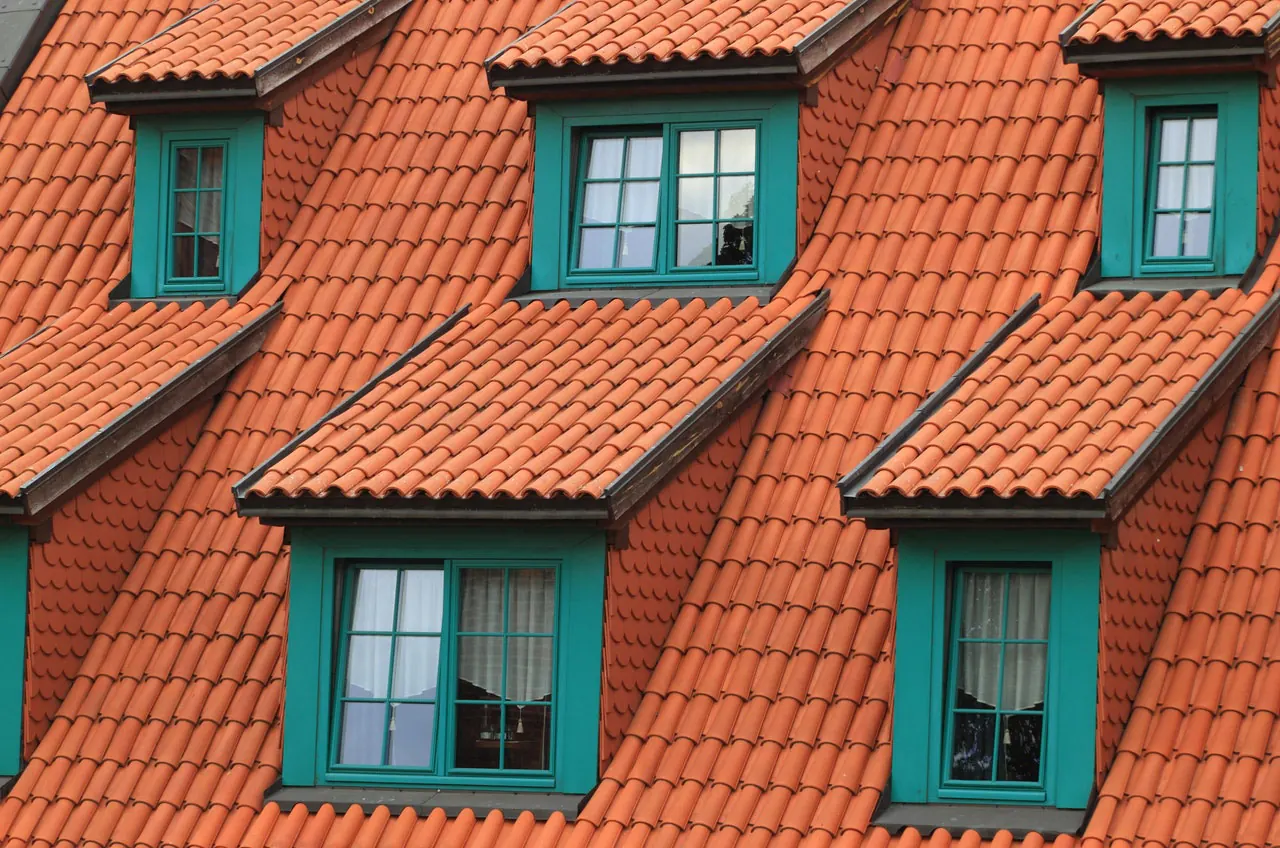
Tile roofs, which are extremely common across Los Angeles County, are not immune either. Concrete tiles in particular have a porous surface that can collect dirt, algae and lichen, while clay tiles can develop dark staining and green or gray growth in shaded areas.
Algae, lichen or moss? How to tell what is growing
The right treatment depends on what is growing. Use this field guide from the ground (binoculars help; please do not climb onto the roof).
| Growth or stain | What it looks like | Where it shows up | How it is treated |
|---|---|---|---|
| Gloeocapsa magma (roof algae) | Dark brown to black streaks, often running downhill from the ridge | Asphalt shingles, especially light-colored ones and shaded slopes | Soft wash with a diluted cleaning solution; stains usually lift during treatment |
| Lichen | Crusty, flat or leafy patches; gray, green or yellow-orange; firmly attached | Shingles and tiles, often in the same shaded areas as algae | Soft wash; dead lichen loosens and weathers away over the following weeks |
| Moss | Green, fuzzy, raised clumps that hold water like a sponge | Heavily shaded roofs, valleys, and areas under trees | Soft wash to kill it, then careful removal; never scrape or blast it off |
| Dirt, pollen and soot | Even grayish film rather than distinct streaks | Any roof, especially near busy roads | Low-pressure rinse with a mild cleaner |
| Rust or tannin stains | Orange-brown runs below metal flashing, vents or under trees | Below vents, satellite mounts, and under certain trees | Spot treatment with a cleaner suited to that stain |
Lichen, a partnership between a fungus and an alga, anchors itself with root-like structures, so scraping it tears up shingle granules or tile surfaces. The correct approach is to kill it and let it release naturally.
Why you should never pressure wash shingles or roof tiles
It is tempting to rent a pressure washer and blast the streaks away. Please do not. ARMA's guidance is blunt: do not use a power washer, brush or broom to clean algae from an asphalt roof, because high-pressure washing is likely to damage it.
Here is what can go wrong on each roof type:
- Asphalt shingles: The granules on the surface protect the asphalt from UV and weather. High pressure knocks them loose (you will see them pile up in your gutters), which can shorten the life of the shingle. Spraying upward or at an angle can also drive water under the shingle tabs.
- Concrete tiles: High pressure can erode the surface and its color coating, leaving a blotchy, rougher tile that gets dirty faster. Tile manufacturer Eagle Roofing advises that if water pressure is used on concrete tile, it should never exceed 1,200 PSI, and recommends hiring a licensed, insured professional experienced with tile roofs.
- Clay tiles: Clay is durable but brittle. Foot traffic and concentrated pressure can crack or shift tiles, and a cracked tile can let water reach the underlayment.
- Any roof: A wet roof is slippery, and falls from roofs are a serious hazard. Water and a ladder are a dangerous combination for anyone without proper fall protection and experience.
Warranty check: Many roofing manufacturers publish specific cleaning instructions, and aggressive cleaning methods can conflict with them. If your roof is relatively new, look up your manufacturer's care recommendations before anyone puts water or chemicals on it.
If you want a deeper comparison of the two methods across every surface on your property, see our guide on soft washing vs. pressure washing.
How soft washing removes roof algae safely
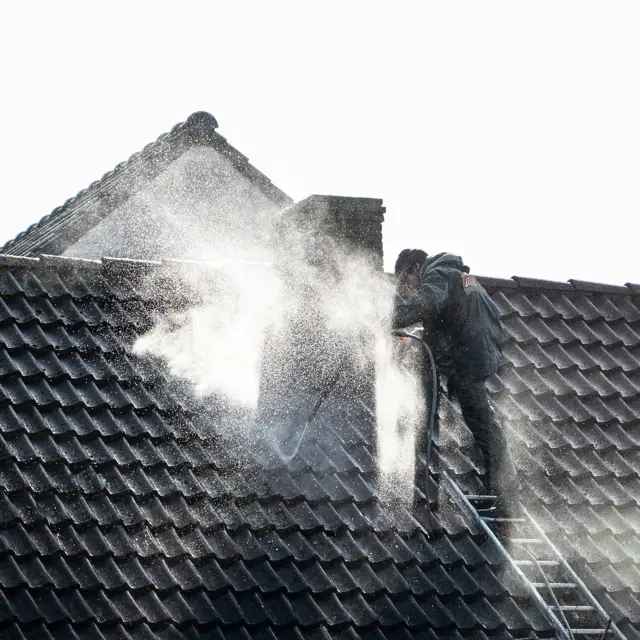
Soft washing uses low pressure, roughly the force of a garden hose, to apply a diluted cleaning solution that does the work chemically instead of mechanically. ARMA describes the basic principle for homeowners: a solution of sodium hypochlorite (the active ingredient in household bleach) and water can lighten algae discoloration, followed by a gentle rinse. Professional soft washing builds on the same idea with properly mixed solutions, surfactants that help the mix cling to the roof, and equipment that keeps pressure low.
Because the treatment kills the organism rather than just scraping off the top layer, results tend to last longer than a rinse alone. Here is how a typical professional roof soft wash works:
- Inspect from the ground and the ladderWe identify the roof material, the type of growth, any broken or loose tiles, and where runoff will go. Existing damage is pointed out before any cleaning starts.
- Protect plants and surfacesLandscaping below the roofline is pre-wet with fresh water, delicate plants are covered, and downspouts may be redirected so concentrated runoff is not dumped into one flower bed.
- Mix the solution for the jobThe strength is matched to the surface and the growth: a lighter mix for routine algae, a stronger one for heavy staining or lichen, always within what the roofing material can tolerate.
- Apply at low pressureThe solution is applied from the bottom up with low-pressure equipment, with minimal foot traffic on the roof, especially on tile.
- Allow dwell timeThe mix sits long enough to kill the algae and lichen. It is not left to dry on the surface in direct afternoon sun.
- Rinse gently and rinse the landscaping againThe roof is rinsed at low pressure, and plants, walls and walkways below are thoroughly rinsed with fresh water.
- Final walk-throughWe check gutters, downspouts and the yard, and point out anything that may need follow-up, such as lichen that will continue to release over the coming weeks.
Protecting plants, pets and runoff
Cleaning solutions that kill algae can harm plants if applied carelessly, so protection is built into every step: plants are pre-wet and rinsed afterward, sensitive beds are covered, downspout runoff is managed, and pets stay indoors until surfaces are rinsed. Wash water should never flow into the street gutter or storm drain; our guide to eco-friendly pressure washing and California runoff rules explains why.
At Spraydaddys, one owner is on site at every job, and we use biodegradable, commercial-grade cleaners with water recovery where required. We are licensed and insured with general liability and workers' compensation coverage, which matters on any job that involves a ladder and a roof.
Keeping roof algae from coming back
Roof algae spores are airborne, so there is no permanent cure. ARMA and other roofing industry sources note that discoloration will likely return over time after cleaning. You can slow the return considerably with a few habits:
- Trim overhanging branches to let in sun and reduce debris on the roof.
- Keep gutters and valleys clear so the roof dries quickly after rain.
- Do not let sprinklers hit the roof or the walls below it; constant irrigation overspray keeps surfaces damp.
- Consider algae-resistant shingles with copper-containing granules when it is time to re-roof. Industry sources also discuss copper or zinc strips near the ridge as a preventive measure; ask a licensed roofer whether they suit your roof.
- Schedule periodic inspections. Catching light growth early means a lighter treatment. Many Los Angeles homes do well with a roof cleaning every few years, while shaded or coastal homes may need it more often.
Algae on the roof often comes with mildew on north-facing walls, which a soft wash house cleaning handles in the same visit.
DIY vs. professional roof cleaning: what it costs and when to call
A careful homeowner can treat a small patch of algae on a single-story roof from a ladder using ARMA's guidance. Beyond that, the risks stack up: falls, damaged shingles or tiles, burned plants and runoff.
Call a professional when the roof is two stories or steep, when it is tile (because walking on it can break tiles), when you see lichen or moss rather than just streaks, or when you simply do not want to spend a weekend on a ladder. Spraydaddys roof cleaning starts from $399, depending on roof size, pitch, material and the type of growth. You can get a ballpark figure from the calculator on our pricing page, and new customers who sign up for texts receive 15% off.
Set honest expectations: most algae streaks lift completely, and lichen fades over the weeks after treatment as it releases. Very old or deeply set staining sometimes cannot be fully removed. Our satisfaction guarantee covers a re-clean at no charge if you are not happy, within reason.
Roof algae FAQ
Do black streaks mean my roof needs to be replaced?
Usually not. Black streaks are typically roof algae, which is primarily a cosmetic problem in its early stages. A professional soft wash can remove it without harming the roof. If the shingles are curling, cracked, or losing large amounts of granules, have a licensed roofer inspect them, but the streaks alone are not a reason to re-roof.
Can I pressure wash my tile roof myself?
We do not recommend it. High pressure can erode the surface of concrete tiles, crack clay tiles, and walking on a wet tile roof is dangerous and can break tiles. A low-pressure soft wash with the right solution cleans tile roofs safely, with minimal foot traffic.
Will roof cleaning harm my plants?
It should not when it is done correctly. Professionals pre-wet plants, cover sensitive ones, manage downspout runoff, and thoroughly rinse everything with fresh water after the roof is treated. Ask any company you hire to explain how they protect landscaping before they start.
How long does a roof stay clean after soft washing?
It varies with shade, moisture and nearby trees. Because soft washing kills the growth instead of just rinsing it, results generally last much longer than a rinse. Sunny roofs in inland areas often stay clean for several years, while shaded or coastal roofs may need attention sooner.
Ready to get rid of those black streaks? Spraydaddys soft washes shingle and tile roofs across Los Angeles County and the Long Beach area, with an owner on site at every job. Request your free roof cleaning quote or call us at (213) 866-1990.