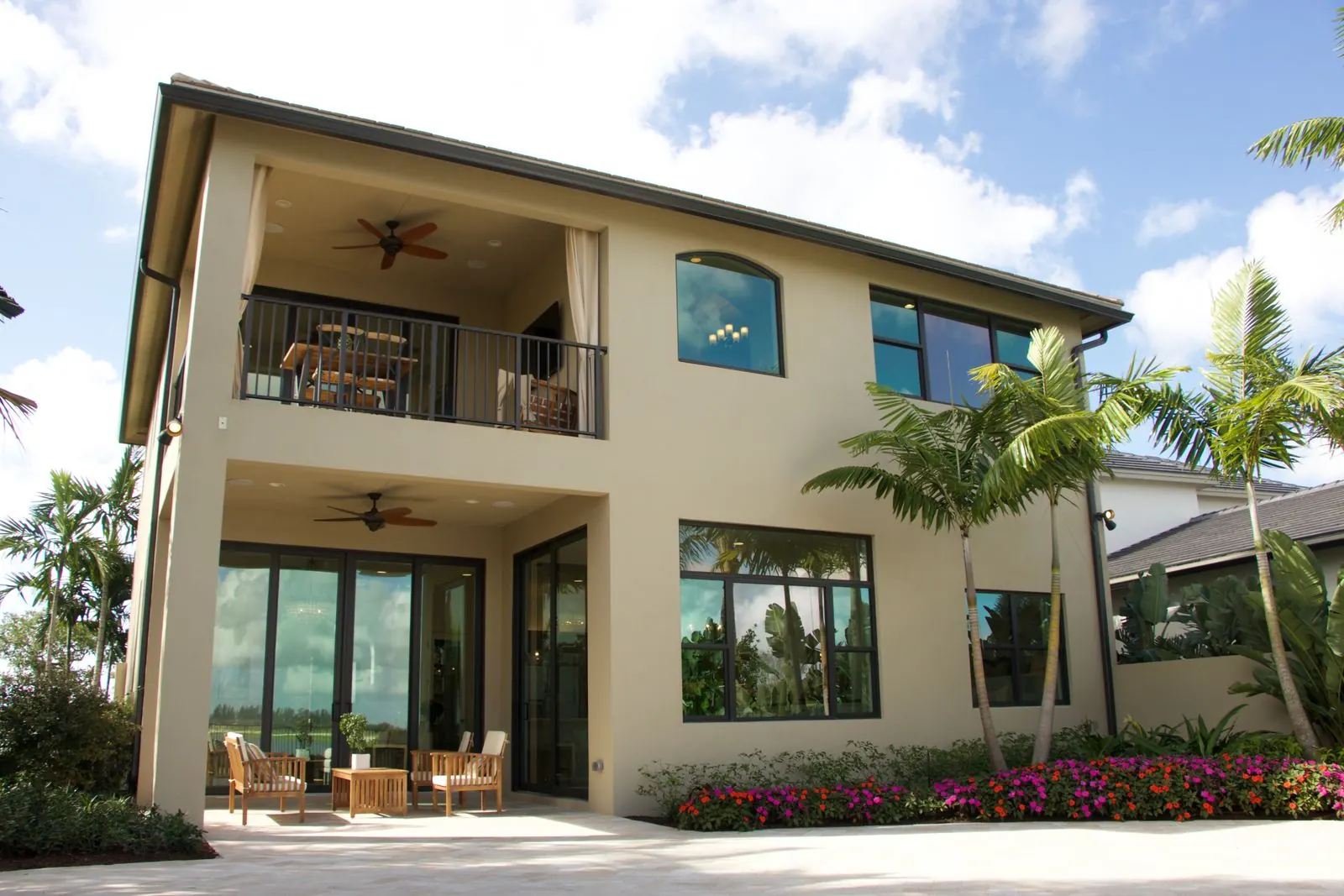
Key takeaways
- Most Los Angeles homes do well with a professional exterior wash about once a year. Coastal homes in Long Beach, San Pedro and the beach cities often need it every 6–12 months.
- Where you live matters more than the calendar. Marine layer moisture, salt air, Santa Ana dust, wildfire ash and tree sap all shorten the time between washes.
- Stucco, painted wood and vinyl siding should be soft washed with low pressure and a cleaning solution. Blasting them with high pressure causes damage.
- For most homeowners, late summer through early fall is the best time to book, after the dusty months and before the rainy season.
- Washing on a schedule helps paint, sealants and trim last longer because dirt, mildew and mineral deposits don't get time to set in.
The short answer: once a year for most LA homes
If you only want one number, here it is: plan on a professional house wash about once a year. That interval suits most stucco and painted homes in the Los Angeles basin. It removes a year of dust, pollen, cobwebs and early mildew before any of it stains the surface or starts breaking down paint.
One number doesn't fit everyone, though. A house two miles from the ocean in Belmont Shore lives through very different conditions from a house in the foothills of Altadena or the flats of the San Fernando Valley. Coastal homes deal with constant moisture and salt. Inland and valley homes get fine dust, hot sun and, some years, wildfire ash. Homes under big trees collect sap, leaf litter and bird droppings no matter where they are.
The rest of this guide explains how each of these factors works so you can set the right schedule for your own house. It also covers how to tell your home is overdue, and how a professional house wash fits into a full exterior maintenance calendar.
Why Southern California homes get dirty differently
People tend to think of Los Angeles as dry and clean. Exterior walls tell another story. Several local conditions cause buildup, and each needs a slightly different response.
Marine layer and mildew on shaded walls
The late-spring and early-summer marine layer ("May Gray" and "June Gloom") keeps coastal and near-coastal neighborhoods damp for hours every morning. North-facing walls, side yards between houses and walls behind dense landscaping may not dry out until afternoon. That repeated moisture is enough for mildew and algae to take hold. They show up as green, gray or black film, usually starting low on the wall or under eaves. Removing this growth takes a cleaning solution that kills the organisms. Pressure alone mostly knocks the surface layer off.
Coastal salt air in Long Beach and the beach cities
Ocean air carries fine salt that settles on every surface near the coast. Salt attracts moisture, holds grime against the wall and contributes to corrosion of metal light fixtures, railings, hose bibs and window hardware. Homes in Long Beach, Seal Beach, San Pedro, Palos Verdes, Redondo, Santa Monica and Venice usually look dull and filmy sooner than inland homes. For them, a 6- to 12-month cycle is often worth it.
Dry, dusty summers and Santa Ana winds
Months without rain let dust, brake dust from nearby streets and pollen pile up on walls, window sills and eaves. Santa Ana wind events can blow in a lot of fine grit in a day or two. Once fall rains start, that dust turns into muddy streaks running down from window sills and roof edges. Valley and inland homes, and anything near a freeway or busy boulevard, tend to look gray and streaky first.
Wildfire ash and smoke residue
During and after fire events, ash and soot can settle on homes miles from the fire line. Los Angeles County Public Health advises against leaf blowers and other methods that put ash back into the air, and recommends gentle cleanup plus a well-fitted N95 mask when you spend extended time in ash-covered areas. Their current guidance is on the LA County Department of Public Health site. Ash residue left on paint and window frames can be stubborn, and the wash water shouldn't go down the storm drain. This is a good job to hand to a crew that recovers water.
Trees, sap and bird droppings
Eucalyptus, pine and jacaranda all bring their own problems. Pine and eucalyptus drip sticky sap, jacaranda drops purple blossoms that stain when they get wet and crushed, and any big tree draws birds. Bird droppings are acidic and can etch or discolor finishes if left too long. A house under heavy canopy usually needs a wash more often than one with open sky overhead.
Hard water and sprinkler overspray
Much of Southern California has hard water. When sprinklers hit the same patch of stucco or glass every day, minerals dry into chalky white rings and spots. Regular washing slows the buildup. Heavy, long-standing mineral deposits may need a dedicated treatment, and adjusting the sprinkler heads is the real fix.
Recommended washing schedule by location and home type
Use this table as a starting point. These are typical ranges based on general professional experience, not fixed rules. Your own home's exposure and how much you care about appearance will move you toward one end or the other.
| Home situation | Typical washing interval | Main culprits |
|---|---|---|
| Coastal (Long Beach, San Pedro, beach cities) | Every 6–12 months | Salt film, marine-layer mildew, corrosion on fixtures |
| Central LA basin (Downtown, Mid-City, Norwalk, Downey) | Every 12 months | Urban dust, traffic grime, cobwebs |
| Valleys and foothills (San Fernando Valley, San Gabriel Valley, Pasadena) | Every 9–12 months, plus after Santa Ana or fire events | Fine dust, ash, heat-baked grime |
| Homes under heavy tree cover | Every 6–9 months | Sap, leaf tannin stains, bird droppings, shade mildew |
| White or light-colored stucco | Every 6–12 months | Dirt and streaks show up quickly |
| Homes near freeways, construction or busy roads | Every 6–12 months | Soot, brake dust, construction dust |
Rental properties, HOAs and businesses often add washes before inspections, turnovers or open houses. If you're preparing to sell, read our curb appeal checklist for selling your Los Angeles home.
Signs your house needs washing now
Even with a schedule, it pays to walk around the house a couple of times a year. Book a cleaning if you notice any of the following:
- Green, gray or black patches on north-facing walls, under eaves or behind shrubs. That's usually mildew or algae.
- Dark streaks running down from window sills, light fixtures or the roofline.
- White chalky residue that rubs off on your hand. This can be oxidized paint, which needs gentle handling.
- Rust-colored or white mineral rings where sprinklers hit the wall.
- Cobwebs, wasp nests and insect debris packed into eaves, corners and light fixtures.
- Sticky spots or speckling from sap or bird droppings on walls, trim and windows.
- A layer of ash or soot after a nearby fire or a strong wind event.
- Paint that looks faded and dull even though it isn't very old. Grime often hides how good the paint underneath still is.
Quick test: Wipe a white rag across a shaded section of wall. If it comes back gray or green, the dirt is building up faster than rain or your garden hose can handle, and a proper wash will make a visible difference.
Building a full exterior cleaning calendar
Siding is only one part of the exterior. A coordinated schedule keeps every surface on track, and doing several services in one visit saves time and usually money. Here's a typical calendar for a Los Angeles-area single-family home:
| Surface | Typical frequency | Best timing | Starting price |
|---|---|---|---|
| House washing (siding, stucco, trim) | Every 6–12 months | Late summer to early fall | From $299 |
| Gutter cleaning | 1–2 times per year | Before the rainy season, and again in spring if trees overhang | From $149 |
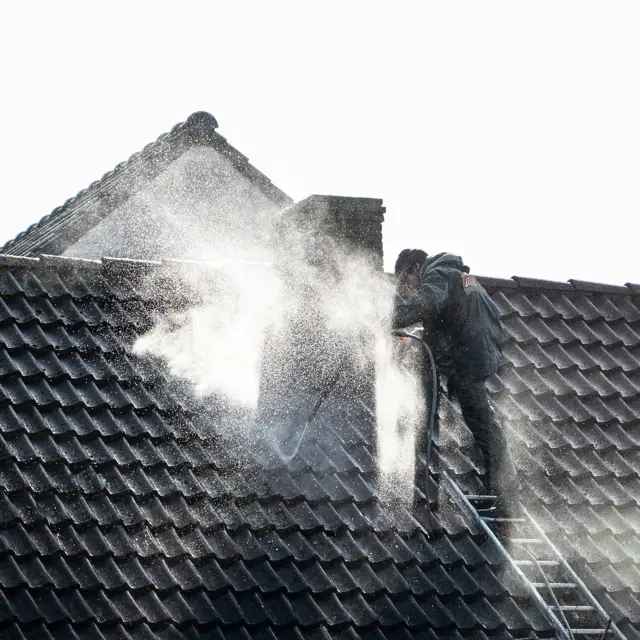
| Roof cleaning | When streaks or growth appear, often every few years | Dry months | From $399 |
| Driveway & sidewalk cleaning | Once a year (more for heavy oil or gum) | Any time; ideal before events or a sale | From $179 |
| Deck & patio cleaning | Once a year | Spring, before outdoor season | From $199 |
Want a ballpark for your property? The pricing page has an interactive calculator. If your roof has black streaks, our guide to black streaks on Southern California roofs explains what causes them and why roofs need a gentle approach.
How a professional house wash works (and why pressure isn't the point)
A lot of people picture house washing as a guy with a powerful wand blasting the walls. On most homes, that's the wrong approach. High pressure can gouge stucco, force water behind siding and into wall cavities, break window seals and strip paint that's already oxidized. Professionals rely on soft washing: low pressure plus a biodegradable cleaning solution that dissolves dirt and kills organic growth, followed by a gentle rinse. Our article on soft washing vs. pressure washing goes into the difference in detail.
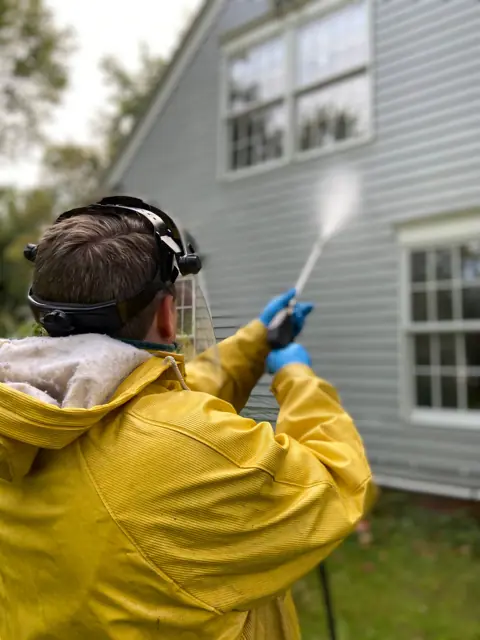
A typical Spraydaddys house wash follows these steps:
- Walkaround and inspectionAn owner walks the property with you, notes problem areas such as mildew, oxidized paint, mineral spots and loose trim, and confirms which surfaces to include.
- Protect the propertyWe pre-wet landscaping, close windows, check that exterior outlets and light fixtures are covered, and move patio furniture and planters as needed.
- Apply the cleaning solutionWe apply a biodegradable, commercial-grade solution at low pressure, matched to the surface and the type of buildup.
- Let it dwellThe solution sits for a few minutes so it can break down dirt and kill mildew and algae at the root, instead of only scraping off the surface.
- Rinse from top to bottomA low-pressure rinse carries everything down and off the wall. We pay extra attention to sills, eaves and the faces of the gutters.
- Final rinse and walkthroughWe rinse the plants again, put everything back where it was and walk the job with you. If something isn't right, we fix it under our satisfaction guarantee.
Where required, we use water recovery so wash water stays out of storm drains. In California, anything other than rainwater generally isn't allowed to flow into the storm drain system. Our article on eco-friendly pressure washing and California runoff rules covers the details.
Best time of year to pressure wash in Los Angeles
Southern California's mild weather means you can wash a house almost any month. Some timing works better than others, though:
- Late summer to early fall (August–October): This is the most popular window for good reason. It clears out a full season of dust and pollen, the walls dry fast, and the house goes into the rainy season clean, so the first storms don't turn caked dust into muddy streaks.
- After the first big rain: Sometimes the first storm shows you exactly where the problems are, like streaks under sills or overflowing gutters. A wash right afterward resets everything for winter.
- Spring (March–May): This is a good time to clear winter mildew from shaded walls and get decks and patios ready for outdoor season.
- After a wind or fire event: Wash once air quality has improved and local guidance says cleanup is safe.
Extreme heat days are the main thing to avoid. On a very hot, sunny wall, cleaning solutions dry too fast and can leave spotting. Professional crews deal with this by working the shaded sides first and rinsing more often, but if you're doing anything yourself, start early in the morning.
Frequently asked questions
Can washing my house too often damage it?
Soft washing done correctly, with low pressure and a solution matched to the surface, won't harm stucco, paint or siding even if you do it twice a year. Damage comes from too much pressure, the wrong nozzle or harsh chemicals, not from how often you wash. Avoid repeated DIY blasting of stucco or painted wood with a high-pressure tip.
How long does a professional house wash take?
A typical single-family home in Los Angeles usually takes a few hours. Larger homes, multi-story walls, heavy mildew or extra services like gutters and driveways add time. You don't have to stay home the whole time, but we do ask that windows are closed and pets are kept indoors.
How much does house washing cost in Los Angeles?
Spraydaddys house washing starts at $299. The final price depends on the home's size, height, access and condition. Our pricing page has an interactive calculator for a quick estimate, and quotes are always free. New customers who sign up for texts get 15% off.
Is a garden hose enough between professional washes?
Rinsing with a hose helps with loose dust and pollen, and it's a good habit on coastal homes to knock salt off windows and fixtures. It won't remove mildew, algae, sap or mineral deposits, though. Those need the right cleaning solution and enough dwell time.
Ready to set a schedule that fits your home? Spraydaddys serves homeowners across Los Angeles County and the Long Beach area, and an owner is on site at every job. Request your free quote online or call us at (213) 866-1990, and we'll recommend a washing interval that fits your neighborhood, your home and your budget.